If you are thinking about buying a Dorchester triple-decker, you are not just buying a place to live. You are weighing a home, a long-term asset, and in many cases, a property with income potential all at once. That mix can create real opportunity, but it also means you need to look beyond finishes and square footage. This guide will help you focus on the factors that matter most before you make an offer in Dorchester. Let’s dive in.
Why Dorchester triple-deckers stand out
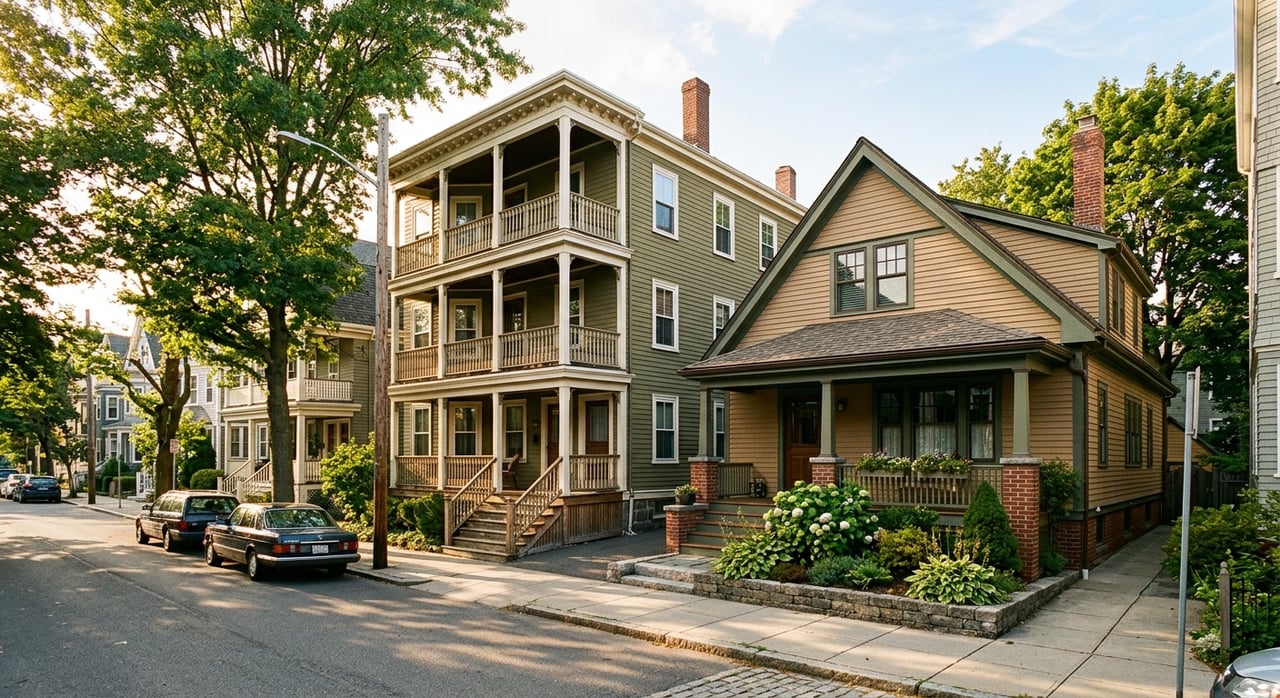
Boston defines a triple-decker as a three-story, wood-frame building with one unit stacked on each floor and typically a flat roof. Historically, one unit was often owner-occupied while the other two were rented, and many have since been converted into condos, according to City of Boston housing materials.
That history matters because a Dorchester triple-decker can serve different goals. You might plan to live in one unit and rent the others, hold the building as a longer-term investment, or buy with renovation plans in mind. In any of those cases, you should evaluate the property as both a residence and a small multifamily asset.
Dorchester also deserves block-by-block analysis. It is Boston’s largest and one of its most diverse neighborhoods, with Dorchester Avenue serving as a major business corridor, which means location, transit access, and property condition can vary meaningfully from one pocket to the next.
Check legal use first
One of the most important questions is simple: what is the property legally allowed to be? In Boston, the Certificate of Occupancy is the city’s official record of use, and if there is no certificate, the legal occupancy may appear on the most recent long-form permit, according to Boston Inspectional Services.
This is especially important if the listing mentions finished basement space, added bedrooms, or a different unit count than public records suggest. If you assume a space can be used a certain way without verifying it, you could inherit permitting issues, zoning problems, or renovation costs you did not budget for.
Before you move forward, confirm:
- Legal occupancy and unit count
- Whether any space was finished with permits
- Whether past changes triggered zoning review
- Whether the current setup matches city records
If you plan to change occupancy or alter how the building is used, Boston notes that a long-form permit is generally required, and that process can bring zoning review into play.
Inspect the building like a multifamily
A Dorchester triple-decker should be inspected with the mindset of a multifamily buyer, not just a condo or single-family buyer. Boston’s Home Center specifically advises buyers not to waive the inspection, and that is especially sound advice when you are purchasing a three-unit building with multiple systems and shared structural components.
You will want to understand the condition of the roof, exterior, porches, common areas, and major building systems. You should also look closely at deferred maintenance, since small issues in an older multifamily can stack up quickly when they affect more than one unit.
Boston’s permitting guidance also notes that each unit needs two clearly designated means of egress. For residential buildings with three or more units, sprinkler systems are also flagged as a fire-safety consideration in the city’s guidance. Those details may affect both current compliance and future renovation planning.
Review zoning before you plan upgrades
It is easy to assume that because a property already exists as a triple-decker, your future plans will be straightforward. In Boston, that is not always the case. The city recommends starting with its zoning viewer and zoning designation tools, which show district rules, overlays, and whether a use is allowed, conditional, or forbidden.
If your renovation exceeds dimensional limits, you may need a variance from the Zoning Board of Appeal. That can add months to the timeline, which is important if your strategy depends on moving quickly or refinancing after improvements.
Boston’s Planning Department has also acknowledged that small multifamily projects can be long, complicated, and expensive to design and permit under the current code, which is part of the reason the city is working on a Small Multi-family Guidebook.
If you are thinking about finishing space, changing layout, or altering the number of units, bring in the right people early:
- A zoning-aware architect
- A contractor familiar with Boston permitting
- A lender who understands multifamily financing
- A real estate attorney who can review use and permit history
Factor in flood and climate risk
Climate risk is a practical buying issue in Dorchester, not just a future planning topic. The city’s Dorchester climate guide identifies South Dorchester as having one of the largest areas vulnerable to mid-century stormwater flooding, with areas near JFK/UMass, the Neponset River, and Moakley Park facing notable flood exposure, according to Boston’s Dorchester climate guide.
That does not mean every Dorchester triple-decker is exposed in the same way. It does mean you should evaluate flood risk at the property level instead of making assumptions based on the neighborhood name alone.
This matters even more if you plan major renovations. Boston ties flood-hazard review to FEMA Special Flood Hazard Areas, and if improvements in a flood district exceed 50% of market value, the building may need to meet current flood standards. Boston also requires Flood Hazard Review for long-form permits in applicable cases.
FEMA also reminds buyers that flood insurance may be worth considering even outside high-risk zones. In addition to flood exposure, Boston’s climate materials point to hotter urban heat conditions in Dorchester, which makes building resilience and operating costs worth discussing during due diligence.
Model rent potential carefully
A triple-decker can look attractive on paper, but your numbers should be grounded in current local comps, not broad assumptions. Boston’s 2024 citywide figures show a median rent of $2,800 per month, a median single-family sale price of $800,000, and a median condo price of $745,000, according to Boston’s People and Economy report.
Those citywide numbers provide context, but they are not enough to underwrite a specific Dorchester building. Rent potential can vary based on unit size, layout, condition, updates, outdoor space, and exact transit access.
When you analyze the building, focus on:
- Current in-place rents, if occupied
- Market rent for similar nearby units
- Vacancy assumptions during turnover or renovation
- Utility setup and who pays what
- Immediate repair costs and future capital needs
If you plan to owner-occupy, your monthly payment may be offset by rent from the other units. If you are buying strictly as an investment, your analysis should be even more disciplined, especially in a high-cost market.
Understand financing options
Financing can look different depending on whether you plan to live in the building. Boston’s Homebuying Support Hub offers a First-Time Homebuyer Program with a grant equal to 5% of the purchase price plus closing costs if applicable. The city also points buyers to ONE+Boston, ONE Mortgage, MassHousing loans, and down payment assistance options.
Several of these programs are geared toward primary residences and can apply to 2-, 3-, and 4-family homes. They also require homebuyer education and mortgage pre-approval, and income and rent limits are set annually and may change.
That means owner-occupants may have more support pathways to explore than pure investors. If you are buying as a non-owner-occupant, conventional financing may be the more realistic route, and your lender should be comfortable with multifamily underwriting.
Look at transit on a micro-location level
In Dorchester, transit access is a building-specific advantage, not a neighborhood-wide guarantee. Boston’s fare-free bus program currently covers Routes 23, 28, and 29 through June 2026, and those routes connect Dorchester to the broader MBTA network on some of the city’s higher-ridership corridors.
The city has also outlined plans for the Dorchester Greenway, including a 0.7-mile off-road path on top of the MBTA Red Line tunnel between Ashmont Station and Park Street. Projects like that can shape how people move through certain parts of the neighborhood over time.
For buyers, the takeaway is practical. Do not stop at “close to transit” in a listing description. Walk the route, check nearby bus and rail options, and think about how day-to-day access may affect both your own use and future rental demand.
Key questions before you buy
Before you commit to a Dorchester triple-decker, make sure you can answer these questions clearly:
- Is the current use legal and documented?
- Does the building have any obvious deferred maintenance?
- Do all units have proper egress?
- Will your renovation plans require zoning relief or long-form permits?
- Is the property in or near an area with flood exposure?
- Do the rents support your monthly cost assumptions?
- Are you buying as an owner-occupant or investor, and does your financing match that plan?
- How strong is the property’s actual transit access?
When you buy a triple-decker, details matter. The strongest purchases usually happen when you combine neighborhood insight with careful review of records, zoning, condition, and financials.
If you want help evaluating a Dorchester triple-decker from both a lifestyle and investment perspective, connect with Jerome Bibuld. You can get practical guidance on multifamily opportunities, local market dynamics, and how to weigh the numbers before you move.
FAQs
What should you verify first when buying a Dorchester triple-decker?
- You should verify the property’s legal occupancy, unit count, and permit history first, since Boston treats the Certificate of Occupancy or most recent long-form permit as the official record of use.
How important is a home inspection for a Dorchester triple-decker?
- A home inspection is very important because a triple-decker has multiple units, shared systems, and older building components, and Boston’s Home Center advises buyers not to waive the inspection.
Can you renovate or add space in a Dorchester triple-decker easily?
- Not always, because Boston zoning and permitting can be complex for small multifamily properties, and projects that exceed dimensional rules may require a variance and longer approval timeline.
Should you worry about flood risk when buying in Dorchester?
- You should evaluate it carefully at the property level, especially in parts of South Dorchester and near areas the city identifies as vulnerable to stormwater flooding, because flood standards can affect renovation costs and insurance decisions.
Are there special financing options for buying a Dorchester triple-decker?
- If you plan to live in the property, you may be able to explore owner-occupant programs through Boston’s Homebuying Support Hub, including assistance options for 2-, 3-, and 4-family homes.
Does transit access really affect a Dorchester triple-decker’s value and appeal?
- Yes, because transit convenience can influence daily use and rental demand, and in Dorchester that advantage often comes down to the specific block, nearby bus routes, and access to the broader MBTA system.