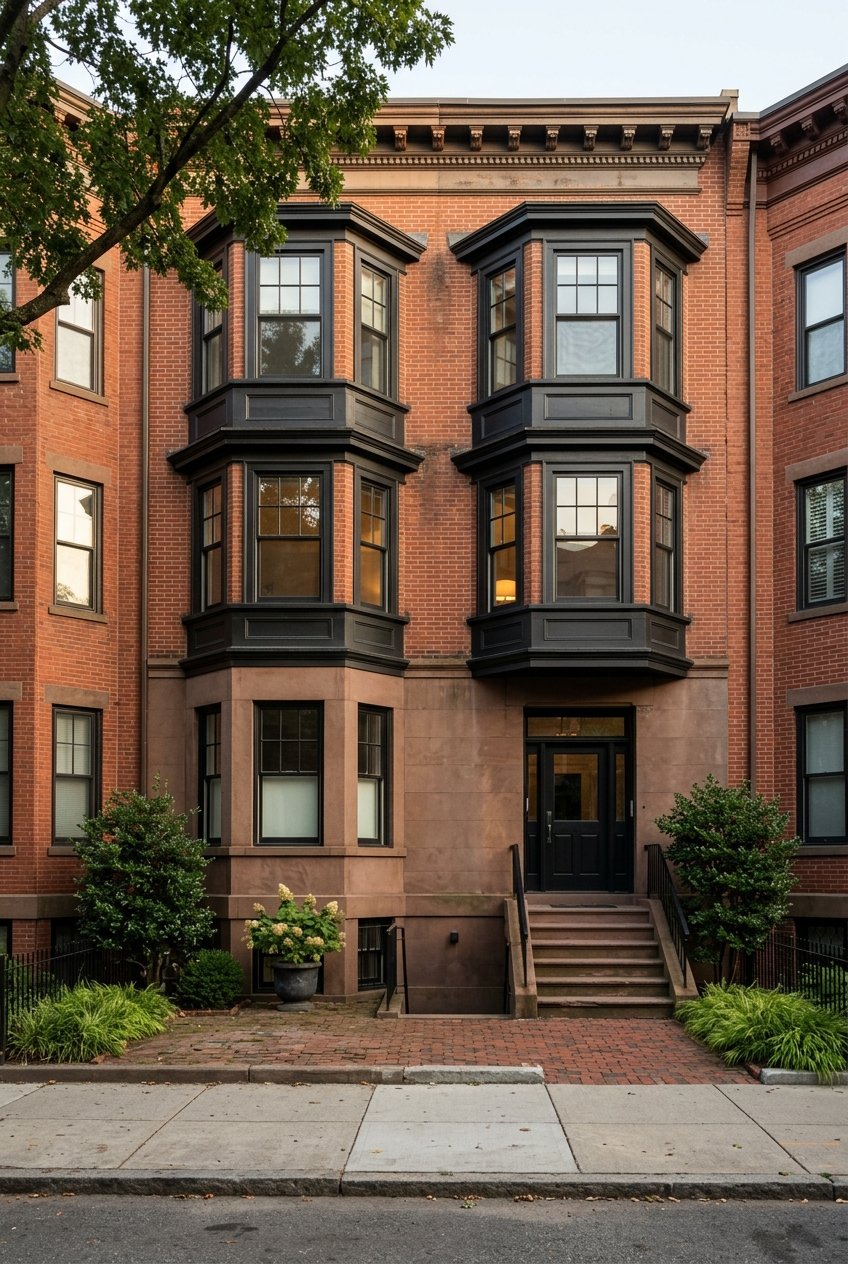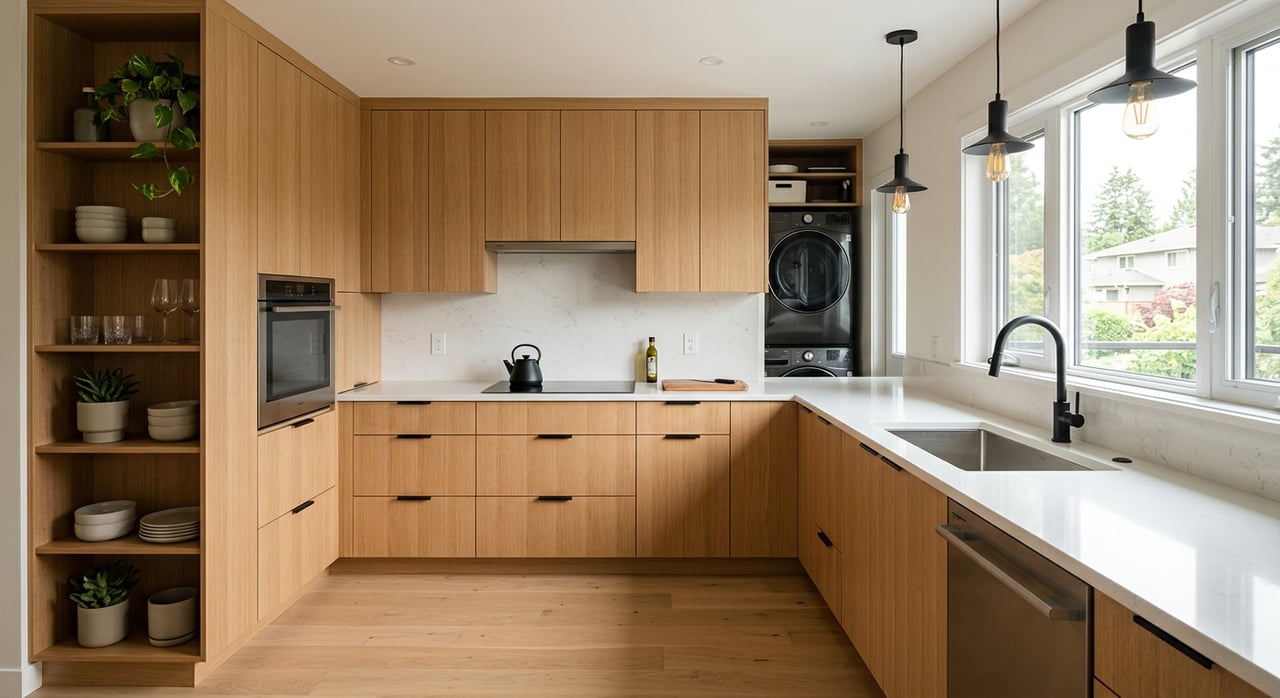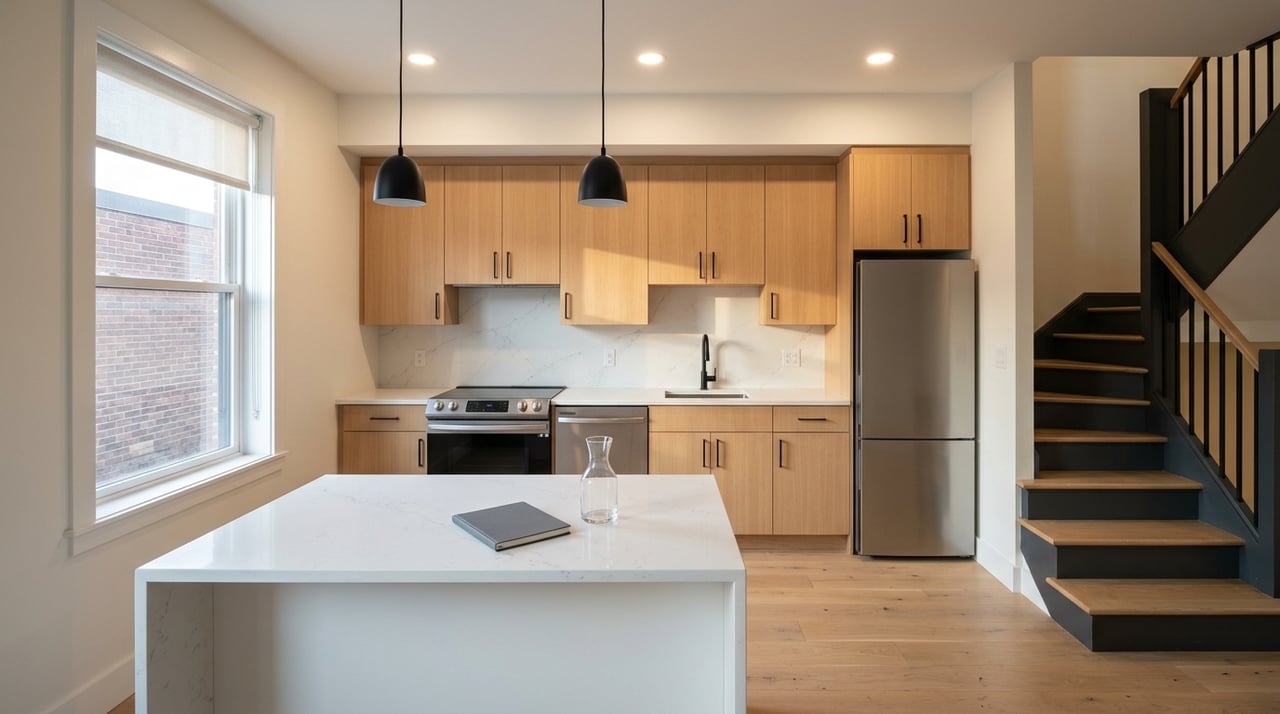
If you are looking at a Newton multi-family property and assuming the best deal is simply the one with the highest projected rent, you could miss what really drives long-term performance. In Newton, small multi-family investing is shaped by scarce housing stock, premium pricing, older buildings, and location-specific demand. If you want to buy smarter, it helps to know which details deserve the closest scrutiny before you make an offer. Let’s dive in.
Why Newton draws serious investors
Newton stands out because it combines strong household income, high owner occupancy, and limited small multi-family inventory. According to U.S. Census QuickFacts for Newton, the city has about 90,700 residents, 32,194 households, a 70.0% owner-occupied rate, and a median household income of $190,304.
That matters because investors are buying into a market with high barriers to entry and strong underlying demand. Newton also has a median owner-occupied home value of $1,264,900, which helps explain why well-positioned two- and three-family properties often command premium pricing.
Newton multi-family supply is limited
A key reason Newton deals stay competitive is that the housing stock is not dominated by small multi-family buildings. The city’s 2020 housing data shows 33,054 total housing units, including 5,386 two-family units and 819 three-family units, or about 18.8% of all housing stock, according to Newton housing data.
For you as an investor, that means two things. First, quality inventory can be hard to replace. Second, when a property has the right location, layout, and condition, buyers often compete aggressively for it.
Smart investors start with location quality
In Newton, location is more than a zip code. Investors usually look closely at how a property connects to transit, village centers, and daily convenience because these factors can affect both tenant demand and future value.
The city identifies Green Line D stations at Riverside, Woodland, Waban, Eliot, Newton Highlands, Newton Centre, and Chestnut Hill, plus commuter rail stations at Auburndale, West Newton, and Newtonville on its public transportation page. A property with practical access to these stations can have a clearer rental story than one that depends fully on driving.
Transit can support demand
Transit access matters in Newton because the city is not purely car-dependent. For many renters, especially in higher-priced markets, convenience can justify stronger rents and lower turnover.
That does not mean every unit near a station automatically performs the same way. You still need to weigh street appeal, parking, unit updates, and building functionality, but walkable transit access often strengthens the overall investment case.
Village centers may shape future pressure
Newton’s Village Center Overlay District adds another layer to your analysis. The city says multifamily housing is allowed by-right near seven transit stations, including Auburndale, West Newton, Newtonville, Newton Centre, Newton Highlands, Eliot, and Waban, and notes Newton is fully compliant with the MBTA Communities Law as of March 2025 in its overlay district summary.
For long-term investors, that suggests areas near these nodes may continue to attract tenant demand and redevelopment interest. In practical terms, a good Newton deal is not just about current rent. It is also about how well the property sits within the city’s longer-term housing pattern.
Rent assumptions need real local comps
One of the biggest mistakes investors make is underwriting Newton with broad city averages. The market is too varied for that.
RentCafe’s Newton rent trends estimate average citywide rent at $3,828, with two-bedroom units around $4,075 and three-bedroom units around $5,103. Those numbers are useful for context, but they are not a substitute for unit-specific comps.
Newton rents vary by property type
In Newton, unit size, condition, parking, vintage, and transit access all matter. A renovated unit in a well-located two-family can compete in a very different tier than an older apartment with dated finishes.
That is why smart investors test the rent story carefully. They look beyond one citywide average and ask whether the actual unit mix, finish level, and location support the projected income.
Directional data is not underwriting data
Recent portal data reinforces that Newton is a premium market. Zillow reported an average home value around $1.49 million with homes going pending in about 22 days as of February 2026, while Realtor.com described Newton as a seller’s market in January 2026.
Still, portal data uses different methods and should be treated as directional. If you want to protect your downside, your pro forma should reflect actual comparable rentals and realistic leasing assumptions, not best-case estimates.
Condition can make or break the deal
Many Newton multi-family properties are older, which creates both opportunity and risk. A building that looks like a simple cosmetic update from the outside may need significant work once you get into systems, code items, and safety compliance.
That is why experienced buyers spend real time on physical due diligence. In Newton, the renovation path is often just as important as the purchase price.
Lead compliance deserves early attention
Lead compliance is one of the most important underwriting issues in older rental housing. Newton’s lead paint guidance states that properties where children under six live must be tested and brought into compliance, and landlords are responsible for deleading rental properties.
If you are evaluating an older two- or three-family, you should not treat this as a minor line item. Lead remediation can materially change your renovation budget and timeline.
Rehab costs go beyond finishes
Newton’s Housing Rehabilitation Program highlights the kinds of work that often come up in older properties, including weatherization, code correction, structural repairs, accessibility improvements, and hazard abatement.
For investors, the takeaway is simple. New kitchens and baths may help rent levels, but the less visible work often determines whether the project actually pencils out.
Historic district rules can affect plans
Before assuming you can make easy exterior upgrades, confirm whether the property sits in one of Newton’s local historic districts. The city states there are four local historic districts, covering 887 properties, in its historic preservation overview.
If the property is in one of these districts, exterior changes may be subject to review. That can affect timelines, costs, and the scope of your value-add strategy.
Flexibility adds value in Newton
The strongest deals often have more than one viable path. In Newton, that may mean a property works for a straight rental hold, an owner-occupant buyer, or a future configuration that creates added income potential.
This flexibility matters because exit options help protect value. In a high-basis market, the more use cases a property supports, the more resilient the investment may be.
ADUs can create another option
Newton notes that a single- or two-family home can add one accessory dwelling unit regardless of zoning district, according to the city’s ADU guidance. The city also describes ADUs as a way to create rental units that are generally less expensive than comparable multifamily units.
That will not apply to every acquisition strategy, but it is a useful Newton-specific factor to review. If a property qualifies and the layout supports it, an ADU may add income flexibility over time.
Conservative underwriting wins here
Newton is not a market where sloppy assumptions get forgiven. Purchase prices are high, taxes are meaningful, and renovation costs can escalate quickly.
The city’s FY2026 residential tax rate is $9.69 per $1,000 of assessed value. When you combine that with acquisition basis, insurance, maintenance, and turnover costs, your margin for error can narrow fast.
Pricing spreads show why details matter
Newton sales data shows how much pricing can vary from one property to another. In a city sample of multi-family sales from September 2022 through April 2024, a two-family at 15 Crafts St sold for $480,000, while a new-construction two-family at 92 Chapel St sold for $2.9 million. In the same sample, three-family examples included 15 Chase St at $1.7 million and 173 Cypress St at $1.918 million, based on Newton multi-family sales data.
The lesson is that Newton does not reward broad assumptions. Condition, design, utility, and micro-location can move value dramatically, even within the same city.
Smart operators also think about compliance
A good deal is not just the one that looks best on a spreadsheet. It is also one you can operate smoothly and lawfully.
Newton’s fair housing guidance states that landlords may screen applicants using credit, landlord references, sufficient funds, and criminal-record checks, but those criteria must be applied consistently and without steering or discrimination. That is an important reminder for small landlords and investors building long-term holds.
What smart investors usually check first
If you are sizing up a Newton two- or three-family, these are often the first priorities:
- Transit access and connection to village centers
- Rent comps based on actual unit quality, not broad averages
- Lead, code, and structural issues that affect renovation budgets
- Historic district status before planning exterior updates
- Tax and expense load under conservative assumptions
- Flexibility of use, including owner-occupant appeal or ADU potential where applicable
The bottom line on Newton deals
In Newton, the smartest multi-family investors do not chase headline rent or assume every property will follow the same formula. They focus on transit advantage, realistic rent support, physical condition, legal constraints, and flexible long-term positioning.
If you want help evaluating Newton multi-family opportunities with a practical eye on rent potential, renovation risk, leasing strategy, and off-market possibilities, connect with Jerome Bibuld to schedule a free consultation.
FAQs
What makes a Newton multi-family deal attractive to investors?
- A strong Newton multi-family deal usually combines transit access, realistic rent potential, manageable renovation risk, and a location that supports long-term tenant demand.
How important is transit access for Newton investment property?
- Transit access matters because Newton has Green Line D and commuter rail stations that can support renter demand and may also influence future redevelopment pressure.
How should you estimate rent for a Newton two-family or three-family?
- You should rely on current unit-specific comparable rentals and not just citywide averages, because Newton rents vary widely by size, condition, parking, and location.
What renovation issues matter most in older Newton multi-family homes?
- Lead compliance, code items, structural repairs, weatherization, and possible historic district review are some of the most important issues to verify early.
Can an ADU add value to a Newton investment property?
- In some cases, yes. Newton says a single- or two-family home can add one ADU regardless of zoning district, which may create more long-term income flexibility.
What expenses should you underwrite carefully in Newton multi-family deals?
- You should pay close attention to property taxes, renovation costs, maintenance, turnover, and any compliance-related expenses because Newton is a high-basis market with limited room for error.